















7 Foods That Support Nitric Oxide

Share
Nitric oxide is one of the most important molecules you have probably never thought about. It tells your blood vessels when to relax and widen, helping blood carry oxygen and nutrients to your muscles, brain and organs. Your body makes it naturally — but production tends to slow with age, inactivity and poor diet.
The encouraging news is that what you eat can make a real difference. Certain foods provide the raw materials your body uses to make nitric oxide, while others help protect it once it is made. Here are seven everyday foods with research behind them, plus practical tips for getting more of them into your week.
Key takeaways
- Your body makes nitric oxide from L-arginine/L-citrulline and from dietary nitrate.
- Beets and leafy greens are the richest nitrate sources; watermelon provides L-citrulline.
- Cocoa, berries, pomegranate, citrus and garlic help protect nitric oxide and the vessel lining.
- Exercise and nasal breathing support nitric oxide; overusing antiseptic mouthwash may blunt it.
- Aim for at least one nitrate-rich vegetable every day.
How Food Supports Nitric Oxide
Your body has two main ways to produce nitric oxide:
- The arginine pathway. Cells lining your blood vessels convert the amino acid L-arginine into nitric oxide using an enzyme called eNOS. L-citrulline, found in watermelon, is recycled into arginine and feeds this pathway.
- The nitrate–nitrite pathway. Nitrates from vegetables are converted by bacteria in your mouth into nitrite, which the body then turns into nitric oxide. This route becomes especially important as the arginine pathway slows with age.
A third group of foods — those rich in polyphenols and antioxidants — does not supply nitric oxide directly but helps protect it from being broken down and supports the health of the vessel lining that produces it.
7 Foods That Support Nitric Oxide
1. Beets
Beets are one of the richest sources of dietary nitrate. Randomized trials using beetroot juice have shown increases in blood nitrite levels and support for healthy blood pressure, and athletes use it to support endurance. Try roasted beets in salads, a small glass of beet juice, or beet powder in a smoothie.
2. Leafy Greens (Arugula, Spinach, Kale)
Leafy greens rival beets for nitrate content — arugula is among the highest of all vegetables. In one study, a nitrate-rich spinach meal increased nitric oxide status and supported healthy vessel function. A large handful of greens at lunch and dinner is an easy target.
3. Watermelon
Watermelon is one of the best natural sources of L-citrulline, which the body converts into arginine and then nitric oxide. Research has found that supplemental citrulline raises blood arginine more effectively than arginine itself. Watermelon is also hydrating and low in calories.
4. Dark Chocolate and Cocoa
Cocoa flavanols support the endothelium's ability to produce nitric oxide. Clinical studies have found that flavanol-rich cocoa supports healthy blood pressure and vessel function. Choose dark chocolate with at least 70% cacao, and keep portions to a square or two.
5. Garlic
Garlic contains sulfur compounds that have been studied for their ability to support nitric oxide production and healthy blood pressure. Crushing or chopping garlic and letting it sit for a few minutes before cooking helps form its active compounds.
6. Citrus Fruits
Oranges, grapefruit and lemons are rich in vitamin C, an antioxidant that helps protect nitric oxide and supports the enzyme that makes it. Whole fruit also brings fiber and other beneficial plant compounds.
7. Pomegranate and Berries
Pomegranate, blueberries, grapes and other deeply colored fruits are rich in polyphenols that help defend nitric oxide from oxidative stress. Grape seed extract, a concentrated source of these polyphenols, has been studied for its support of healthy blood vessels.
Quick Reference: Nitric Oxide Foods
| Food | How it helps | Easy way to eat it |
|---|---|---|
| Beets | Dietary nitrate | Roasted, juiced or as beet powder |
| Leafy greens | Dietary nitrate | Salads, sautés, smoothies |
| Watermelon | L-citrulline | Fresh slices, frozen cubes |
| Dark chocolate | Cocoa flavanols | 1–2 squares of 70%+ cacao |
| Garlic | Sulfur compounds | Crushed into sauces and dressings |
| Citrus | Vitamin C (protects NO) | Whole fruit, squeeze over greens |
| Pomegranate & berries | Polyphenols | Breakfast bowls, snacks |
How Much Is Enough?
Researchers studying dietary nitrate typically use amounts in the range of roughly 300–500 mg of nitrate per day — about what you would get from a glass of beetroot juice or a couple of generous servings of leafy greens. Nitrate content in vegetables varies a lot with soil, season and freshness, so it is better to aim for consistency than precision.
A practical rule of thumb: include at least one nitrate-rich vegetable (beets, arugula, spinach, lettuce, celery, chard) every day, and add a second source of polyphenols (berries, cocoa, grapes, pomegranate) alongside it.
A Sample Day of Nitric Oxide–Friendly Eating
| Meal | What to eat | Why it helps |
|---|---|---|
| Breakfast | Greek yogurt with blueberries, pomegranate seeds and a few walnuts | Polyphenols and healthy fats |
| Lunch | Large arugula and spinach salad with roasted beets, chickpeas, olive oil and lemon | Dietary nitrate plus vitamin C |
| Snack | A bowl of watermelon or an orange | L-citrulline or vitamin C |
| Dinner | Salmon with garlic-sautéed kale and quinoa | Nitrate, sulfur compounds and omega-3s |
| Dessert | One or two squares of 70%+ dark chocolate | Cocoa flavanols |
Cooking Tips to Preserve Nitrate and Nutrients
- Eat some greens raw. Boiling leaches nitrate into the cooking water; salads, light sautéing and steaming retain more.
- Use the cooking liquid. If you boil beets or greens, use the liquid in soups or sauces.
- Pair with vitamin C. A squeeze of lemon helps favor nitric oxide formation.
- Buy fresh and store cold. Nitrate levels in leafy greens drop as they age.
Who Benefits Most From Nitric Oxide Support?
Everyone needs nitric oxide, but certain groups pay closer attention to it:
- Adults over 40, as natural production through the arginine pathway tends to slow with age.
- Active people and athletes, who use nitrate-rich foods to support endurance and exercise efficiency.
- People with cold hands and feet who want to support healthy circulation to the extremities.
- Anyone working on heart-healthy habits, as diets rich in vegetables and polyphenols are consistently linked to better cardiovascular health.
Nitric Oxide and Exercise Performance
Athletes were among the first to embrace beetroot juice, and for good reason. During exercise, working muscles need more oxygen-rich blood. Nitric oxide helps by widening blood vessels and may also help muscles use oxygen more efficiently.
Studies in recreational athletes have reported that dietary nitrate can reduce the oxygen cost of moderate exercise and support time to exhaustion, although results in elite athletes are more mixed. For everyday exercisers, the practical takeaway is simple: a nitrate-rich meal or drink two to three hours before a workout is a low-risk way to support performance, and eating nitrate-rich foods regularly supports the vascular system that exercise depends on.
The relationship runs both ways. Regular exercise itself is one of the strongest natural stimuli for nitric oxide production, because the increased blood flow during activity "trains" the vessel lining to produce more.
Common Nitric Oxide Myths
- "More L-arginine is always better." Much of the arginine you swallow is broken down before it reaches the blood vessels. L-citrulline and dietary nitrate are often more efficient routes.
- "You can feel nitric oxide working instantly." Some people notice warmer hands or a better workout "pump," but most benefits are gradual and best judged over weeks.
- "Supplements replace vegetables." Vegetables provide nitrate together with fiber, vitamins and polyphenols that work as a team. Supplements are best used alongside them.
- "Nitric oxide is only for athletes." Healthy blood flow matters for everyone — for the heart, brain, muscles, skin and sexual health.
Habits That Help (and Hurt) Nitric Oxide
Habits That Help
- Exercise regularly. Blood flow during exercise stimulates the vessel lining to produce more nitric oxide over time.
- Breathe through your nose. The nasal passages produce nitric oxide, which you inhale with each breath.
- Eat vegetables at most meals. A diet such as the DASH or Mediterranean pattern naturally provides plenty of nitrate and polyphenols.
Habits That Hurt
- Antiseptic mouthwash overuse. The bacteria in your mouth are needed to convert nitrate into nitrite. Studies show strong antiseptic mouthwash can blunt this process — ask your dentist about how often you really need it.
- Smoking. Damages the vessel lining and reduces nitric oxide availability.
- Diets high in sugar and processed foods. Promote oxidative stress, which breaks nitric oxide down.
- Inactivity. Less blood flow means less stimulus for nitric oxide production.
Can Supplements Help?
Food should come first. Supplements can make it easier to get consistent, research-based amounts of key nutrients every day — for example, the amount of L-citrulline studied in clinical research is hard to get from watermelon alone.
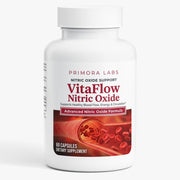
Our VitaFlow Nitric Oxide formula combines L-Citrulline and L-Arginine to support nitric oxide production and healthy blood flow. If you take blood pressure medication, nitrates or erectile dysfunction medication, talk with your doctor before using any nitric oxide supplement.
Frequently Asked Questions About Nitric Oxide Foods
How quickly do nitrate-rich foods work?
In research settings, blood nitrite rises within a few hours of eating nitrate-rich foods such as beets or leafy greens. Long-term benefits come from eating them regularly.
Are the nitrates in vegetables the same as those in processed meat?
The nitrate molecule is similar, but the context is very different. Vegetables come packaged with vitamin C and polyphenols that favor nitric oxide formation, while processed meats are linked to other health concerns. Most dietary nitrate should come from vegetables.
Why does beet juice turn my urine pink?
This harmless effect, called beeturia, happens in some people and is caused by beet pigments. It is not a cause for concern.
Is beet juice safe for everyone?
Beets are high in oxalates, so people prone to kidney stones may want to keep portions moderate. Anyone taking blood pressure medication should be aware that nitrate-rich foods can lower blood pressure a little further.
Conclusion
Supporting nitric oxide does not require exotic ingredients. Beets, leafy greens, watermelon, dark chocolate, garlic, citrus and colorful fruits all help your body make or protect this essential molecule. Combine them with regular exercise, nasal breathing and fewer processed foods, and you give your blood vessels what they need to keep blood flowing freely.
References
- Hord NG, Tang Y, Bryan NS. Food sources of nitrates and nitrites: the physiologic context for potential health benefits. Am J Clin Nutr. 2009;90(1):1–10.
- Webb AJ, et al. Acute blood pressure lowering, vasoprotective, and antiplatelet properties of dietary nitrate via bioconversion to nitrite. Hypertension. 2008;51(3):784–790.
- Bondonno CP, et al. Flavonoid-rich apples and nitrate-rich spinach augment nitric oxide status and improve endothelial function in healthy men and women. Free Radic Biol Med. 2012;52(1):95–102.
- Schwedhelm E, et al. Pharmacokinetic and pharmacodynamic properties of oral L-citrulline and L-arginine: impact on nitric oxide metabolism. Br J Clin Pharmacol. 2008;65(1):51–59.
- Grassi D, et al. Cocoa reduces blood pressure and insulin resistance and improves endothelium-dependent vasodilation in hypertensives. Hypertension. 2005;46(2):398–405.
- Lundberg JO, Weitzberg E, Gladwin MT. The nitrate–nitrite–nitric oxide pathway in physiology and therapeutics. Nat Rev Drug Discov. 2008;7(2):156–167.
These statements have not been evaluated by the Food and Drug Administration. This product is not intended to diagnose, treat, cure, or prevent any disease. This article is for general education and is not medical advice.