













What Is NAD+ and Why Does It Decline With Age?

Share
NAD+ has gone from an obscure biochemistry term to one of the most talked-about molecules in healthy aging. You will see it in podcasts, headlines and supplement aisles, often surrounded by big promises. Underneath the hype is genuinely important science: NAD+ is essential to how every cell in your body makes energy and repairs itself, and levels decline as we get older.
This guide explains what NAD+ actually does, why it declines, what the research does and does not show about raising it, and how lifestyle habits fit alongside nutrients such as NMN.
Key takeaways
- NAD+ is a coenzyme every cell needs to produce energy and repair itself.
- NAD+ levels decline with age as repair demands rise and recycling slows.
- Precursors such as NMN and NR reliably raise NAD+ levels in human studies; research on long-term benefits is ongoing.
- Exercise, sensible eating, good sleep and moderate alcohol support healthy NAD+ metabolism.
- Choose transparent, third-party-tested products and check with your doctor first.
What Is NAD+?
NAD+ stands for nicotinamide adenine dinucleotide. It is a coenzyme — a helper molecule that enzymes need in order to work — found in every living cell. It has two broad jobs:
- Energy production. NAD+ shuttles electrons during the chemical reactions that turn the food you eat into ATP, the energy currency your cells run on. Much of this happens inside the mitochondria.
- Cell maintenance and signaling. NAD+ is consumed by enzymes that repair DNA (PARPs), regulate stress responses and metabolism (sirtuins), and manage immune signaling (CD38).
Because it is used up by these maintenance enzymes, your body constantly has to recycle and rebuild its NAD+ supply.
Why NAD+ Declines With Age
Studies in animals and humans show that NAD+ levels in many tissues fall with age. Researchers have identified several reasons:
- Higher demand. Accumulated DNA damage activates repair enzymes that burn through NAD+.
- Increased CD38 activity. This enzyme, linked to low-grade inflammation that rises with age, breaks down NAD+.
- Slower recycling. The main recycling pathway, which depends on an enzyme called NAMPT, becomes less efficient.
- Lifestyle factors. Inactivity, overeating, poor sleep and excess alcohol all appear to strain NAD+ metabolism.
What Lower NAD+ May Mean
Because NAD+ sits at the center of energy metabolism and cell repair, researchers think declining levels may contribute to several hallmarks of aging, including reduced mitochondrial function, slower DNA repair and changes in metabolic health. Much of this evidence comes from animal studies, and scientists are still working out how directly it translates to people.
NAD+ and the Energy You Actually Feel
It is easy to think of "cellular energy" as something abstract. In practice, the efficiency of your mitochondria shows up in everyday life: how quickly you recover from a workout, whether you hit a wall in the afternoon, how sharp you feel during a long meeting and how well your body handles a heavy meal.
Tissues with the highest energy demands — the brain, heart, skeletal muscle and liver — depend most heavily on a steady supply of NAD+. When supply cannot keep up with demand, cells prioritize survival over performance. Researchers believe this is one reason age-related changes in energy, endurance and metabolic health often appear together.
Signs Your Cellular Energy May Need Support
No single symptom points to low NAD+, and many of these signs have other causes worth checking with a doctor. Still, people who seek out cellular-energy support often describe:
- Feeling tired despite getting enough sleep.
- Slower recovery after exercise or physical work.
- An afternoon energy slump that coffee no longer fixes.
- Brain fog or difficulty concentrating for long periods.
- Gradual weight gain around the waist despite unchanged habits.
Persistent fatigue can also be caused by anemia, thyroid problems, sleep apnea, depression, vitamin deficiencies and medication side effects. If tiredness is new, severe or worsening, see your doctor before assuming it is age-related.
How the Body Makes NAD+
Your cells can build NAD+ from several starting materials, all forms or relatives of vitamin B3:
| Precursor | What it is | Notes |
|---|---|---|
| Niacin (nicotinic acid) | Classic form of vitamin B3 | Effective but can cause skin flushing at higher doses |
| Nicotinamide | Another form of vitamin B3 | Recycled through the main salvage pathway |
| Nicotinamide riboside (NR) | B3 compound found in trace amounts in milk | Studied in several human trials for raising blood NAD+ |
| Nicotinamide mononucleotide (NMN) | Intermediate one step from NAD+ | Studied in animal models and a growing number of human trials |
| Tryptophan | Dietary amino acid | A minor contributor via the "de novo" pathway |
What the Research Shows About Supporting NAD+
Animal Studies
In mice, long-term NMN supplementation has been shown to mitigate several age-associated changes, including declines in energy metabolism, physical activity and insulin sensitivity. These results helped fuel interest in NAD+ precursors, but mice are not people, and doses and outcomes do not translate one-to-one.
Human Studies
Human research is earlier but growing. Clinical trials have consistently shown that NR and NMN raise NAD+ levels in the blood. Some studies have reported improvements in specific measures — for example, a 2021 randomized trial in Science found NMN improved muscle insulin sensitivity in postmenopausal women with prediabetes. Other studies have found little change in the outcomes they measured. The honest summary is that NAD+ precursors reliably raise NAD+ levels, and research into which benefits follow is ongoing.
Supporting Partners: Resveratrol and Alpha Lipoic Acid
Many longevity formulas pair NAD+ precursors with nutrients that work on related pathways. Trans-resveratrol, a polyphenol found in grapes and berries, has been studied for its interaction with sirtuins — the same enzymes that depend on NAD+. Alpha lipoic acid is an antioxidant that plays a role in mitochondrial energy production. Together they support the cellular-energy picture from slightly different angles.
Lifestyle Habits That Support Cellular Energy
Several everyday habits appear to support healthy NAD+ metabolism and mitochondrial function — and they have plenty of other health benefits too.
- Exercise regularly. Both endurance and resistance training stimulate mitochondrial growth and have been linked to healthier NAD+ metabolism in muscle.
- Avoid chronic overeating. Excess calories and high blood sugar strain metabolic pathways that depend on NAD+.
- Protect your sleep. NAD+ metabolism follows a daily rhythm that is tied to your body clock.
- Limit alcohol. Breaking down alcohol consumes NAD+ in the liver.
- Eat B3-rich foods. Fish, poultry, mushrooms, peanuts, whole grains and green vegetables provide NAD+ building blocks.
A Day of NAD+-Friendly Habits
Here is what a realistic day built around cellular energy might look like:
- Morning: wake at a consistent time, get 10 minutes of daylight, and eat a protein-rich breakfast.
- Midday: take a brisk 20–30 minute walk, ideally after lunch to help manage blood sugar.
- Afternoon: stand up and move every hour; choose water or tea over sugary drinks.
- Evening: do a strength session two or three times a week, eat a vegetable-heavy dinner and finish eating a few hours before bed.
- Night: dim the lights, put screens away and aim for 7–9 hours of sleep.
None of these steps is dramatic. Their power comes from repetition: small daily signals that tell your cells to maintain and build their energy machinery.
Common NAD+ Myths
- "NAD+ reverses aging." No supplement reverses aging. NAD+ precursors support cellular energy and repair processes, and research into their long-term benefits in humans is ongoing.
- "Taking NAD+ itself works best." NAD+ is a large molecule that is poorly absorbed intact when swallowed. That is why most research focuses on smaller precursors such as NMN and NR.
- "If a little is good, more is better." Higher doses have not been shown to provide proportionally greater benefits, and very high amounts are less studied for safety.
- "Supplements make exercise unnecessary." Exercise remains one of the most powerful ways to support mitochondria. Precursors are best viewed as a complement, not a substitute.
Safety: Who Should Be Careful
NAD+ precursors have been well tolerated in published human studies at the doses tested, with mostly mild side effects such as nausea, bloating or headache. Some groups should take extra care and speak with a healthcare provider first:
- People who are pregnant or breastfeeding, as safety has not been established.
- Anyone with a history of cancer, because NAD+ supports cell growth and repair in all cells.
- People taking medications that affect blood sugar, blood pressure or blood clotting.
- Anyone with liver or kidney disease.
Research on long-term use spanning many years is still limited, which is another reason to choose transparent, tested products and to share your supplement list with your doctor.
Choosing an NAD+ Supplement
If you decide to add a supplement, a few questions will help you separate quality products from marketing:
- Does the label clearly state the form (NMN, NR) and the dose per serving?
- Is the product third-party tested for identity and purity? This matters especially for NMN, where quality varies widely.
- Is it manufactured in a cGMP facility?
- Are supporting ingredients included at meaningful doses rather than as label decoration?
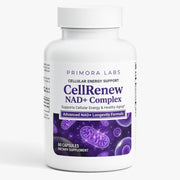
Our CellRenew NAD+ Complex formula delivers 500 mg of NAD+ with Quercetin and Trans-Resveratrol to support healthy NAD+ levels, cellular energy and healthy aging. As with any supplement, check with your healthcare provider first — particularly if you are pregnant, nursing, managing a medical condition or taking medication.
Frequently Asked Questions About NAD+
Will I feel a difference from an NAD+ supplement?
Experiences vary. Some people report steadier energy or clearer focus within a few weeks; others notice little. Because the goal is long-term cellular support, it makes sense to evaluate a routine over at least two to three months.
Is NMN better than NR?
Both are NAD+ precursors that have been shown to raise NAD+ levels in human studies. There is not yet strong evidence that one is clearly superior for everyday use. Quality, dose and consistency matter more than the choice between them.
Can I just take niacin instead?
Niacin also raises NAD+, but higher doses often cause uncomfortable flushing and can affect the liver and blood sugar. Do not take high-dose niacin without medical supervision.
Should I take NAD+ in the morning or at night?
Most people take NAD+ precursors in the morning, in line with the body's natural daily energy rhythm and to avoid any chance of feeling more alert at bedtime. Consistency matters more than the exact time of day.
Conclusion
NAD+ is one of the foundations of cellular energy and repair, and its decline with age is well documented. Research shows that NAD+ precursors like NMN can raise NAD+ levels, while scientists continue to study which long-term benefits follow. The most reliable strategy combines the basics — regular exercise, sensible eating, good sleep and moderate alcohol — with a high-quality, transparently dosed supplement if you want additional support.
References
- Verdin E. NAD+ in aging, metabolism, and neurodegeneration. Science. 2015;350(6265):1208–1213.
- Rajman L, Chwalek K, Sinclair DA. Therapeutic potential of NAD-boosting molecules: the in vivo evidence. Cell Metab. 2018;27(3):529–547.
- Mills KF, et al. Long-term administration of nicotinamide mononucleotide mitigates age-associated physiological decline in mice. Cell Metab. 2016;24(6):795–806.
- Yoshino M, et al. Nicotinamide mononucleotide increases muscle insulin sensitivity in prediabetic women. Science. 2021;372(6547):1224–1229.
- López-Otín C, et al. The hallmarks of aging. Cell. 2013;153(6):1194–1217.
These statements have not been evaluated by the Food and Drug Administration. This product is not intended to diagnose, treat, cure, or prevent any disease. This article is for general education and is not medical advice.